HISTOFAB Proof stage · Nothing on sale

Wear what happened

  1. 30 m

    From across a street you see a shape, and at that distance the shape has to be enough. Nobody reads a caption from thirty metres.

  2. 3 m

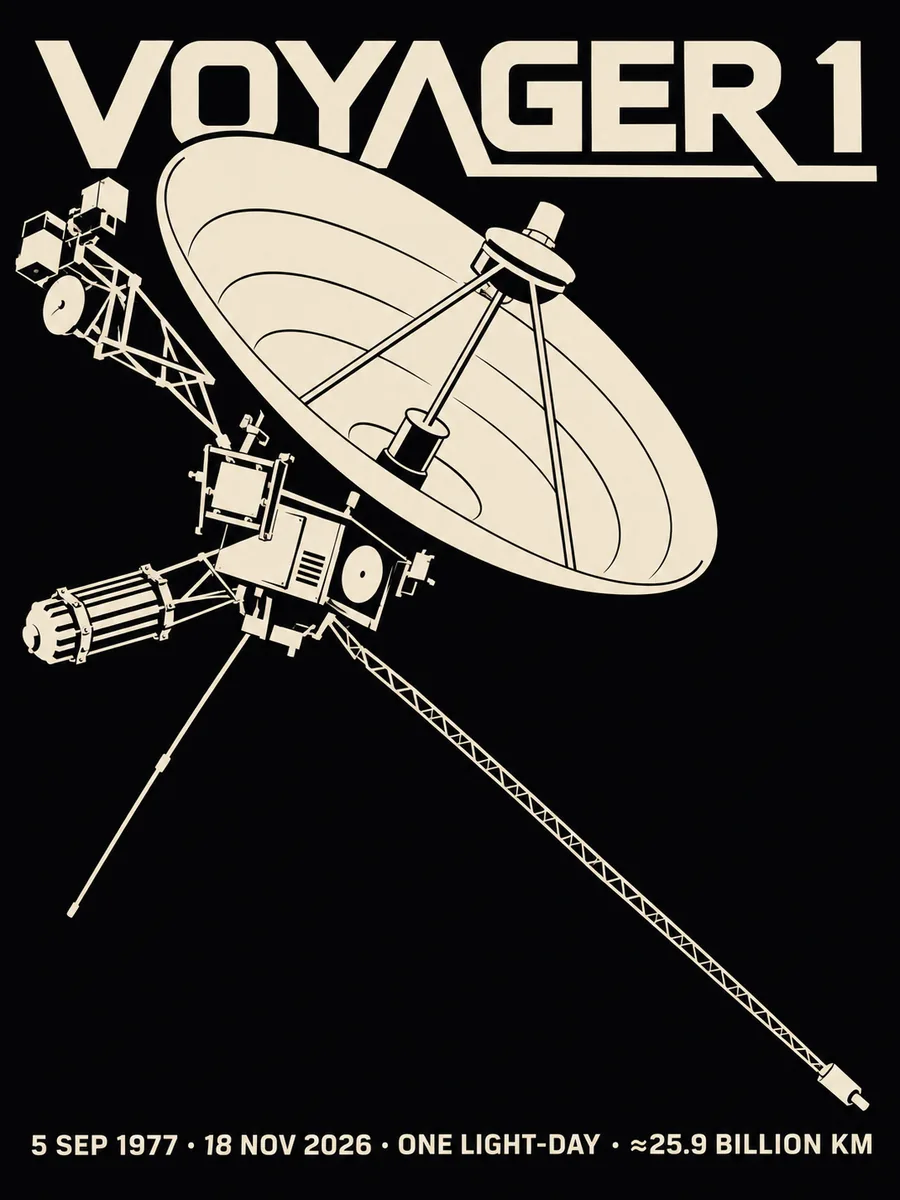
    Across a table the shape becomes a machine, and it must be the right machine. A satellite will not do when the subject is Voyager 1, so the dish, the booms and the long truss have to answer to NASA's own drawings before this plate is released.

  3. 30 cm

    Close enough to read, the machine becomes a fact. On 18 November 2026 Voyager 1 reached one light-day from Earth, which means that a radio signal now travels a full day to find it.

The method

A meaningful big shape. Meaningful small marks. An honest story.

You have seen a million printed shirts, and most of them ask to be looked at once. Histofab draws real things: a ship that sank, a mountain that exploded, a photograph that changed what we know about life. Each one is drawn to be met three times, because that is how a shirt is actually met. Somebody sees it across a street, then across a table, and at last from close enough to read, and each meeting has to give something that the one before it held back. What you have just scrolled through was that method applied to one drawing, and everything else on this page follows from it.

  1. 30 m

    The shape

    From thirty metres a plate needs one strong gesture that survives being small. Every plate is therefore reduced to 96 by 144 pixels, which is about the size of a postage stamp on your screen, and a plate that turns to mud at that size goes back to the board.

  2. 3 m

    The structure

    From three metres the viewer asks for the right thing, and a thing of the right kind is not the same. A satellite is not Voyager and a large hawk is not a peregrine, so the marks inside the shape must follow how the subject is really built.

  3. 30 cm

    The fact

    At thirty centimetres one line of type changes what the picture means. That line is checked against a named source and is never more precise than the source allows, which is why a crater is given as ≈180 km and never as 180.000 km.

The first five plates

Five things that happened

A plate is one drawing of one real thing, made for one colour of cloth. These five came first. Each is shown in the state it has honestly reached, which for all five is the drawing board, for none has yet been proved on cloth and so none is for sale. Move over a plate to study it as you would from three metres.

Plate 01

Voyager 1

The architecture of distance

A machine launched in 1977 is now so far from home that its radio signal, moving at the speed of light, needs a full day to arrive. Most of this plate is left to the dark, because the dark is the subject and the spacecraft is only what lets you measure it.

5 Sep 1977 · 18 Nov 2026 · One light-day · ≈25.9 billion km

Hand
The Draughtsman
Composition
Architectural object
Cloth
Black
Ink
One, bone ivory
State
Concept, second draft. Not yet reviewed against references or proved on cloth.

Truth label

AObserved
The dish, the booms, the launch date, the milestone and the distance, as NASA reports them.
BReconstructed
Nothing on this plate.
CInvented
The viewing angle, the shadow shapes and how much dark surrounds the machine.

Check us: NASA Science, where the Voyagers are now
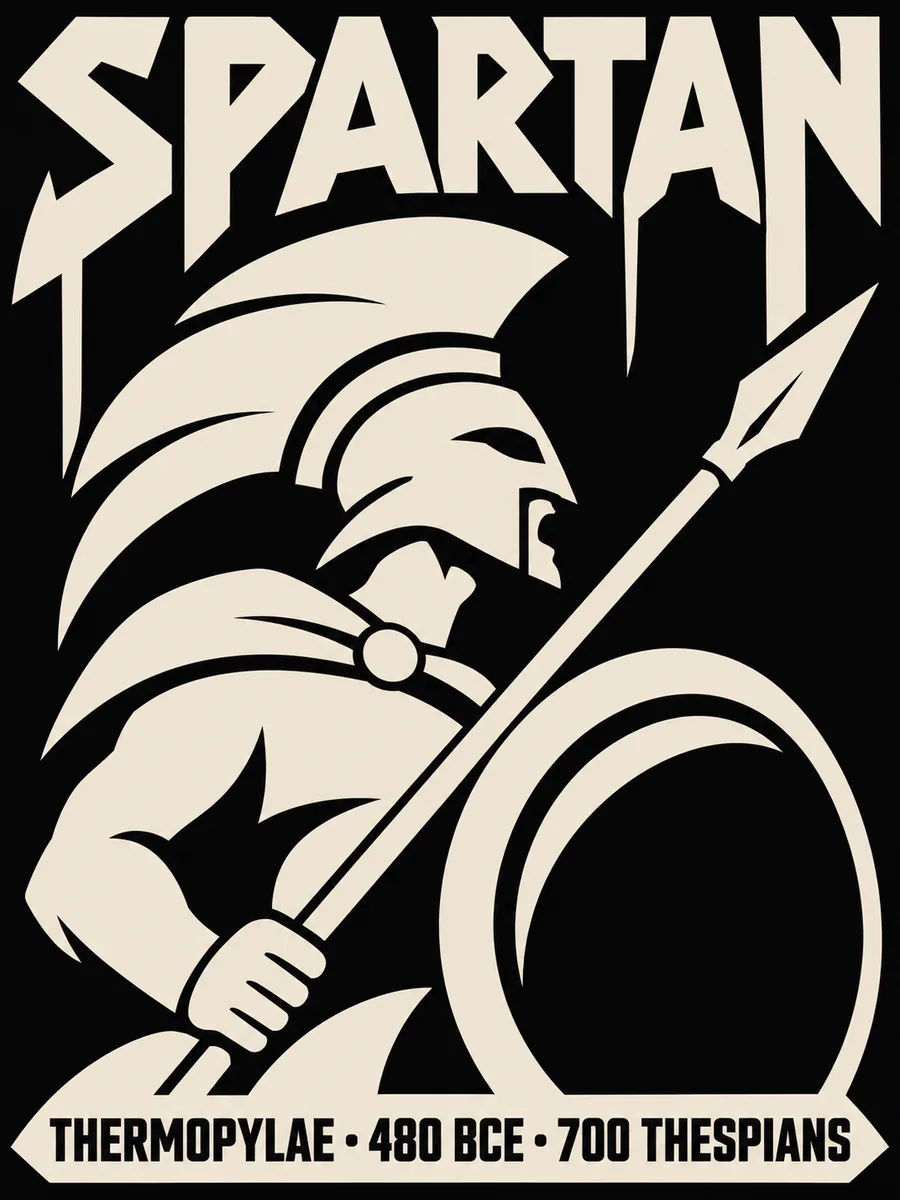
Plate 02

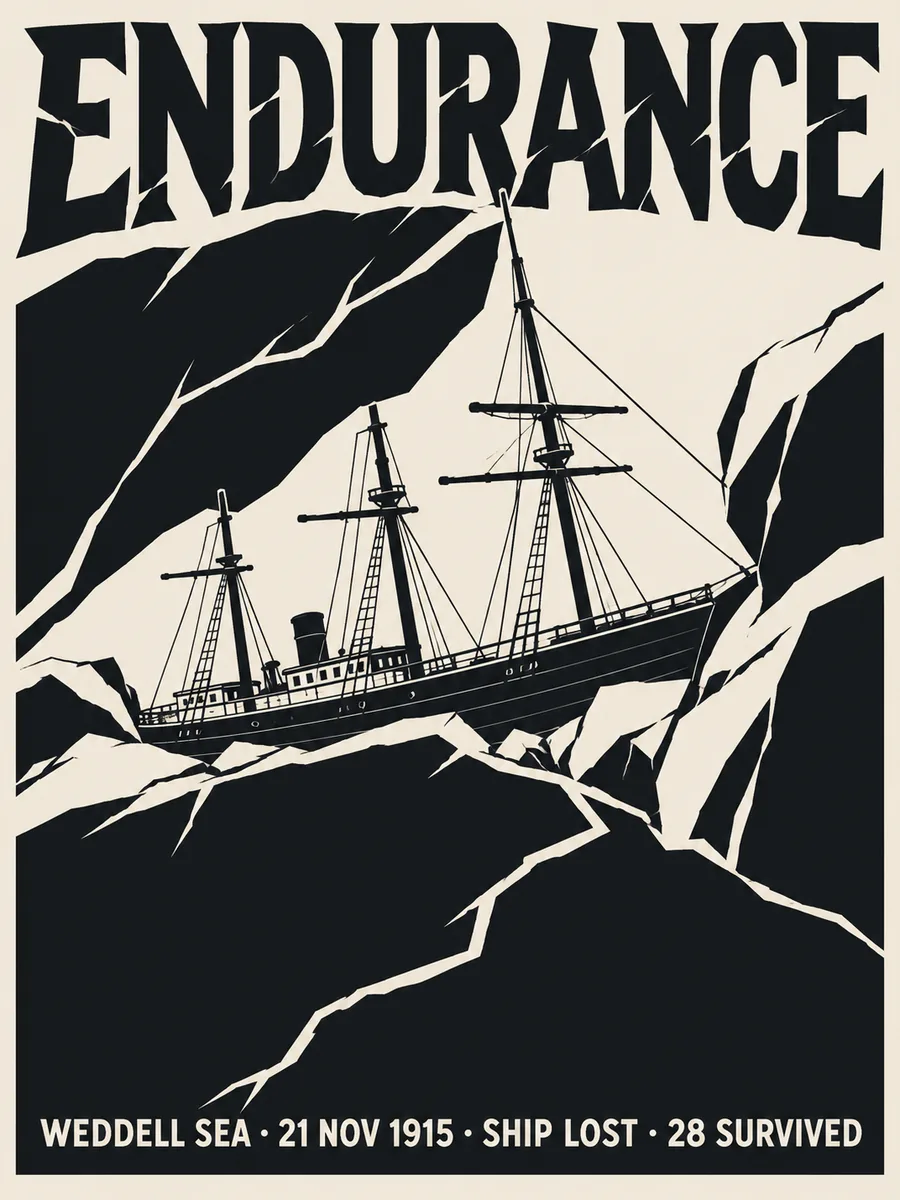
Endurance

A vessel held by an indifferent world

Shackleton's ship did not break the ice. For months the ice held her and then it broke her, and all twenty-eight men of the Weddell Sea party lived. So the ice is drawn as the aggressor and the ship as the thing that is held, which is the reverse of how the first draft had it.

Weddell Sea · 21 Nov 1915 · Ship lost · 28 survived

Hand
The Brush
Composition
Environmental entrapment
Cloth
Ecru
Ink
One, near-black
State
Concept, second draft. Not yet reviewed against references or proved on cloth.

Truth label

AObserved
Pack ice trapped and crushed the ship, and she sank on 21 November 1915. All 28 of the Weddell Sea party survived.
BReconstructed
How ship and ice stood at any one moment, since no reliable picture fixes it.
CInvented
The size of the slabs, and a title cracked like ice.

Check us: de Vos and others, 2023 and Polar Record, 2025

Plate 03

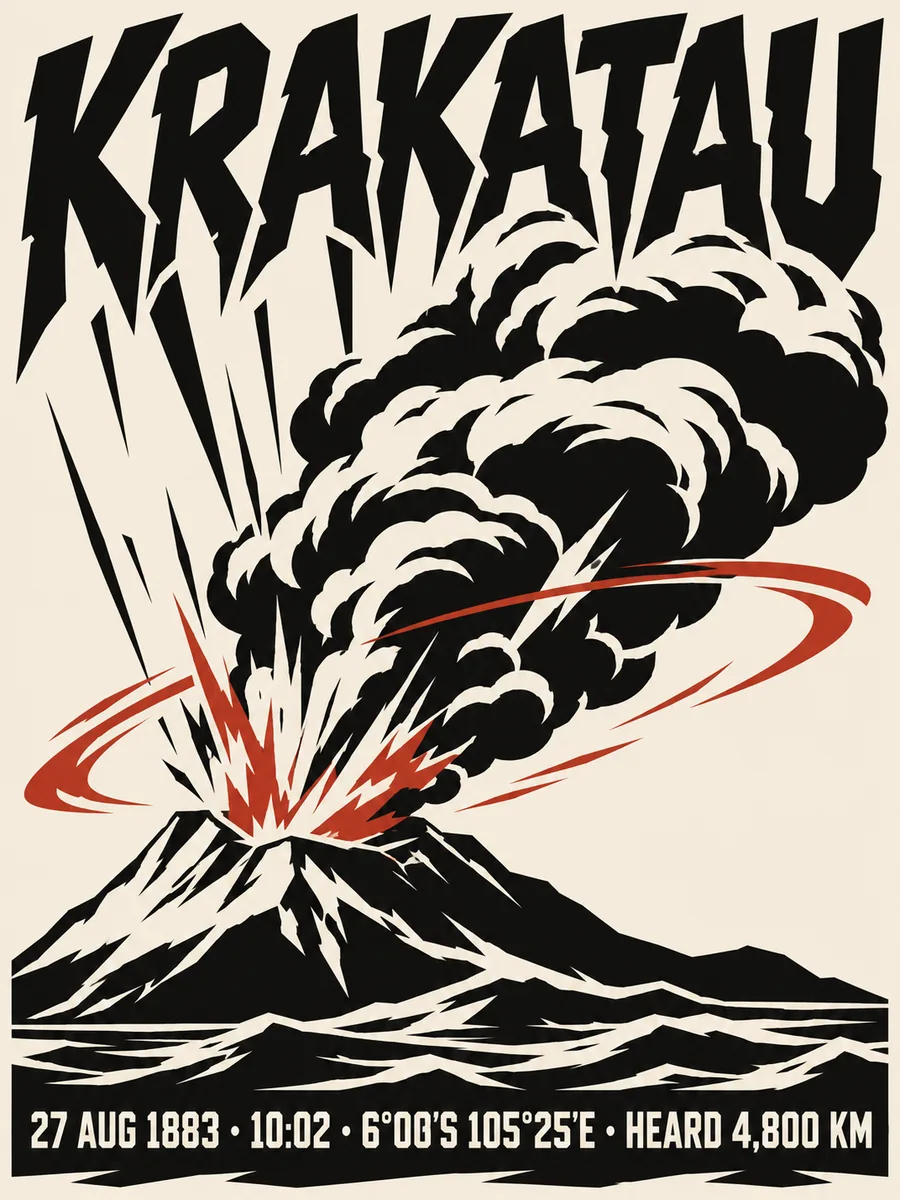
Krakatau

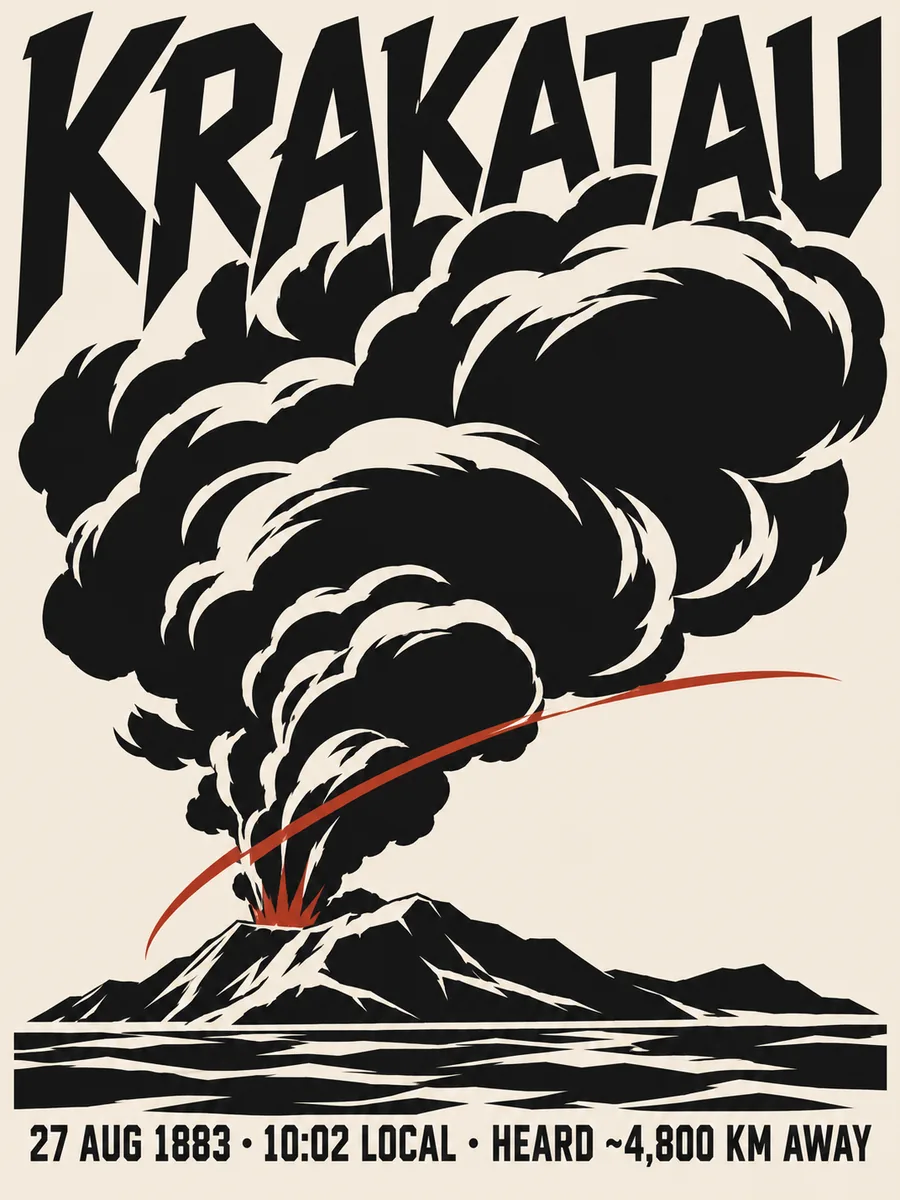
The moment air became a world-scale force

On the morning of 27 August 1883 a volcanic island tore itself apart, and the sound was reported nearly five thousand kilometres away. What frightens about an eruption is its mass, and a picture covered in small explosions has none, which is why the plume is built from a few immense shapes.

27 Aug 1883 · 10:02 local · Heard ~4,800 km away

Hand
The Brush, with the Carver
Composition
Diagonal event
Cloth
Cream
Ink
Two, near-black and one oxide red
State
Concept, second draft. Not yet reviewed against references or proved on cloth.

Truth label

AObserved
The date, a major explosion at 10:02 local time, and reports of the sound about 4,800 km away.
BReconstructed
The shape of the plume, which nobody recorded exactly.
CInvented
The red arc. It is an editorial mark and it measures nothing.

Check us: USGS Volcano Watch, Smithsonian Global Volcanism Program and an AGU study of the timing

Plate 04

Photo 51

Evidence that changed the understanding of life

In May 1952, at King's College London, Rosalind Franklin and Raymond Gosling exposed a fibre of DNA to X-rays for sixty-two hours. Their photograph became evidence for the double helix, and this plate does not reproduce it. What you see is a schematic of the idea, and the label says so, because a pattern that merely resembles data ought not to be worn as data.

Franklin & Gosling · King's College · May 1952 · 62 h exposure

Hand
The Stencil-cutter
Composition
Evidence plate
Cloth
Black
Ink
One, chalk white
State
Concept. Not yet reviewed against references or proved on cloth.

Truth label

AObserved
Franklin and Gosling, King's College, May 1952, and an exposure of 62 hours.
BReconstructed
Nothing on this plate.
CInvented
The whole diffraction motif. It is our schematic and it is not the photograph.

Check us: King's College London and American Journal of Physics

Plate 05

Tunguska

The invisible impact

On 30 June 1908 something exploded in the air over Siberia and laid about two thousand square kilometres of forest flat. Nobody has confirmed a crater. So the plate has no crater either, and the brightest part of it is the one place where nothing is printed.

30 Jun 1908 · ~2,000 km² flattened · No confirmed impact crater

Hand
The Carver
Composition
Radial field with an empty centre
Cloth
Bone
Ink
One, pine black
State
Concept. Not yet reviewed against references or proved on cloth.

Truth label

AObserved
The date, roughly 2,000 km² of forest flattened, and no confirmed impact crater.
BReconstructed
The way the trees lie. The real pattern is more complicated than a fan.
CInvented
The viewpoint, and the rays in the sky.

Check us: NASA technical abstract on aerial bursts and the Tunguska research catalogue

On the bench

Not yet plates

Five more subjects are in the house, and none of them is ready to be called a plate. Three have a written brief and no drawing. Two have drawings that are still being corrected, and you can see what is wrong with them at the errata desk further down.

Garment concepts

The shirt is a medium, not a small poster

A poster hangs flat and is read from the front. A garment has sleeves, seams, a back, a hem and an inside, and it is worn by a body that moves. Histofab therefore asks of every plate what the garment itself can say about the subject, and in each of the nine concepts below one real property of the thing has been given to one real property of the cloth. A distance becomes a sleeve, an absence becomes bare cotton, and a layer of clay becomes a line around the ribs. These are drawings of intent, and none has been sampled.

300 MM123
G-01

The Plate Tee

Plate
Any of the five
Garment
Heavyweight tee
Ink
One ink, or two
State
Not sampled

Every range needs a base garment, and this is the one place where a plate may behave like a poster. A heavyweight tee carries a single plate, 300 by 400 millimetres, on the colour of cloth it was drawn for. That colour matters because the cloth does the work of a second ink: on black the shadows are left unprinted, and on cream the light is, so a plate cannot simply be inverted from one to the other.

  1. The plate, 300 mm across the chest.
  2. The truth label, sewn at the neck beside the care label.
  3. The fact line, the smallest type on the garment, to be proved legible at true size.
1234
G-02

The Light-Day Sleeve

Plate
01 Voyager 1
Garment
Long-sleeve tee
Ink
One ink
State
Not sampled

Voyager's subject is distance, and a sleeve is the longest straight line a shirt has. For that reason the spacecraft sits small on the chest while the left sleeve carries twenty-four marks from cuff to shoulder, one for each hour its signal spends in flight. Your wrist is Earth and your shoulder is the machine.

  1. The spacecraft, small and off the centre line.
  2. Twenty-four hour marks, with a longer mark at every sixth.
  3. At the cuff, the word EARTH.
  4. At the shoulder, 18 NOV 2026.
123
G-03

The No-Crater Tee

Plate
05 Tunguska
Garment
Heavyweight tee
Ink
One ink
State
Not sampled

On most shirts the middle of the chest is where the picture goes. Here the felled timber is printed around the body, over the seams and down the sleeves, and every trunk points away from a middle that is left bare. That bare cloth is the evidence, because Tunguska left no confirmed crater to draw.

  1. The centre, where nothing is printed.
  2. Felled timber, carried over the seams. The pattern shown is schematic.
  3. The fact line, printed inside the hem.
123
G-04

The Pressure Overshirt

Plate
02 Endurance
Garment
Overshirt
Ink
One ink
State
Not sampled

A garment is held together at its seams, and on this overshirt the fractures in the ice run along them, across the yoke, down the placket and round the armholes. Where those lines of pressure meet, on the pocket, sits the ship, and she is small. Nothing is printed on the open panels, so that the cracks read as load carried by the garment itself.

  1. Fractures that follow the seams.
  2. The ship on the pocket, about six centimetres long.
  3. The fact line, under the collar.
123
G-05

The Ash Hood

Plate
03 Krakatau
Garment
Hooded sweatshirt, back
Ink
Two inks
State
Not sampled

An eruption column rises, and a hood does too. On this sweatshirt the plume is printed up the back and carries on over the hood, so that when you raise it the ash stands over your head. Everything is black on cream except a single red mark, and the rule of one red holds for the whole garment, down to the tips of the drawcord.

  1. The plume, continued from the back panel onto the hood.
  2. The one red mark.
  3. At the cuff, HEARD ~4,800 KM AWAY.
1234
G-06

The Boundary Crew

Plate
07 Chicxulub
Garment
Crew sweatshirt
Ink
Two inks
State
Wording unchecked

Around the world the impact is recorded as a thin layer of clay between older rock and younger. On this sweatshirt it is one line, printed right around the body at the height of the ribs, with strata packed beneath it and bare cloth above. At the hem a label reads: below this line, non-avian dinosaurs; above it, none.

  1. One line, right around the body and both sleeves.
  2. Below the line, strata.
  3. Above the line, bare cloth.
  4. The hem label. Its wording awaits a source check.
1:1≈18 CM12
G-07

The 1:1 Tee

Plate
06 Antikythera
Garment
Heavyweight tee
Ink
One ink
State
Plate not drawn

Nearly every plate is a reduction. Voyager's dish is 3.7 metres across and has to shrink about twenty times to sit on a chest. But the largest surviving fragment of the Antikythera mechanism needs no shrinking, for it is only about eighteen centimetres across, and it is to be printed at its true size and marked 1:1. The smallness is the point.

  1. The fragment at true size. The outline is a placeholder, for the plate is not yet drawn.
  2. The scale mark. The fragment's size awaits confirmation from the research project's own figures.
1:1≈45 CM12
G-08

The Stoop Jacket

Plate
Peregrine, on the bench
Garment
Coach jacket, back
Ink
One ink
State
Plate being redrawn

A peregrine in its hunting dive folds itself into something like a teardrop, and the whole bird is short enough to fit between the shoulder blades of a jacket at life size. So it is carried there, head down, with nothing else on the back. Its speed goes on the cuff, where your own hand ends.

  1. The falcon at life size. The outline is a placeholder while the bird is redrawn.
  2. At the cuff, 389 KM/H, once the figure is checked to its source.
FRANKLIN & GOSLING · KING'S COLLEGE · MAY 1952 · 62 H EXPOSURE51 CM51 CM123
G-09

The Photo 51 Square

Plate
04 Photo 51
Garment
Bandana
Ink
One ink
State
Not sampled

A round and nearly symmetrical pattern wants a square, and a square of cloth is a bandana. Ours measures 51 centimetres on a side. That number is a joke, and the truth label files it under invention, where jokes belong.

  1. The schematic, centred.
  2. Fifty-one centimetres each way.
  3. The names and the date, along the lower edge.

The second label

One label for the wash, one for the truth

Every garment carries a care label, which tells you how to treat the cloth. Every Histofab garment is to carry a second label beside it, which tells you how far to trust the drawing. That second label sorts whatever is on the plate into three classes: what was observed, what was reconstructed from evidence, and what the artist invented. A good drawing usually holds all three, and the person wearing it is entitled to know which is which.

The label also carries a revision. A plate that has been released keeps a number, and when a fact is corrected or a line is redrawn the number rises and the errata desk says why. Clothing brands number their editions to make them scarce. Histofab numbers its corrections instead, so that anyone can see them.

Care

Wash cold, inside out.
Dry on a line.
Do not iron the print.

Histofab

Truth label

Plate 01 · Voyager 1

A Observed
The dish, the booms, the launch date, the milestone and the distance, as NASA reports them.
B Reconstructed
Nothing on this plate.
C Invented
The viewing angle, the shadow shapes and how much dark surrounds the machine.

Source: NASA Science
Revision: none yet, plate unreleased
If the facts change, the revision does.

The errata desk

Wrong in ways that looked good

The first drafts of these plates were handsome, and several of them were wrong. They are shown here beside their corrections, because a house that claims to check its facts should be able to show the checking. Drag across a plate to compare its two drafts.

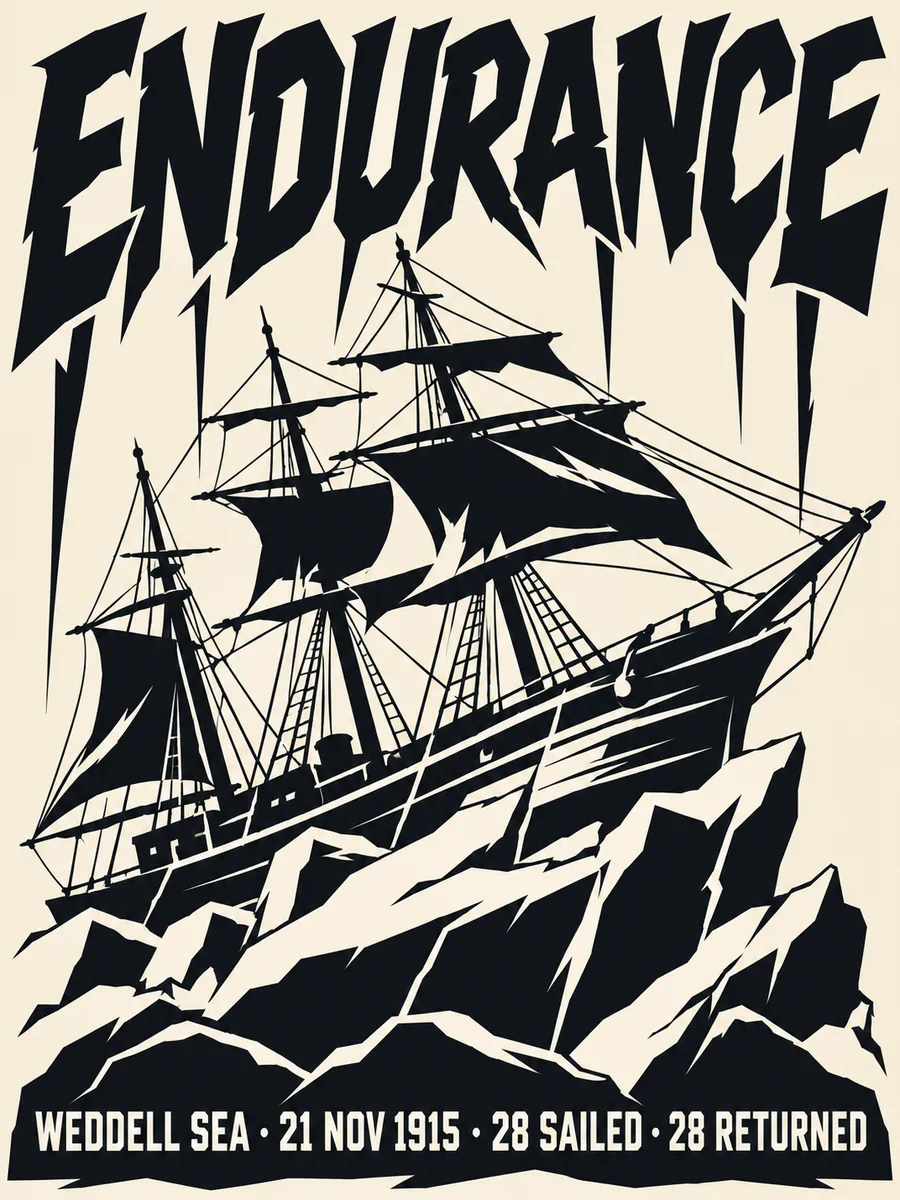
Endurance, first draft: the ship under full sail riding up over the ice. Its line reads 28 sailed, 28 returned. Endurance, second draft: the ship held between slabs of ice. Its line reads ship lost, 28 survived. Draft 1Draft 2

Endurance

In the first draft the ship rode up over the ice under full sail, and her line read 28 SAILED · 28 RETURNED beneath a date in 1915, although the men did not reach safety until 1916. Since the ice was the aggressor, the second draft holds the ship between slabs and says what became of each: SHIP LOST · 28 SURVIVED.

Krakatau, first draft: an eruption with several red marks and a fact line that includes coordinates. Krakatau, second draft: a larger plume with one red arc and a fact line without coordinates. Draft 1Draft 2

Krakatau

The first draft printed a latitude and longitude in its fact line, and the image generator garbled one of them into 6°0B'S. Even spelt correctly, the coordinates of a volcano are not the measured origin of a sound, so they were taken out. Several red marks became one, and the rule of the house since then is that small type is set separately and checked letter by letter.

Voyager 1, first draft: a jagged title with lines hanging from it above the spacecraft. Voyager 1, second draft: a plain wide title and more empty black around the spacecraft. Draft 1Draft 2

Voyager 1

Voyager's first draft borrowed the jagged title of the louder plates and hung decorative lines from it. But Voyager is a quiet subject, and the second draft gives it a quiet title and more dark. The distance also gained an approximation sign, since 25.9 billion kilometres is a rounded figure for a machine that has not stopped moving.

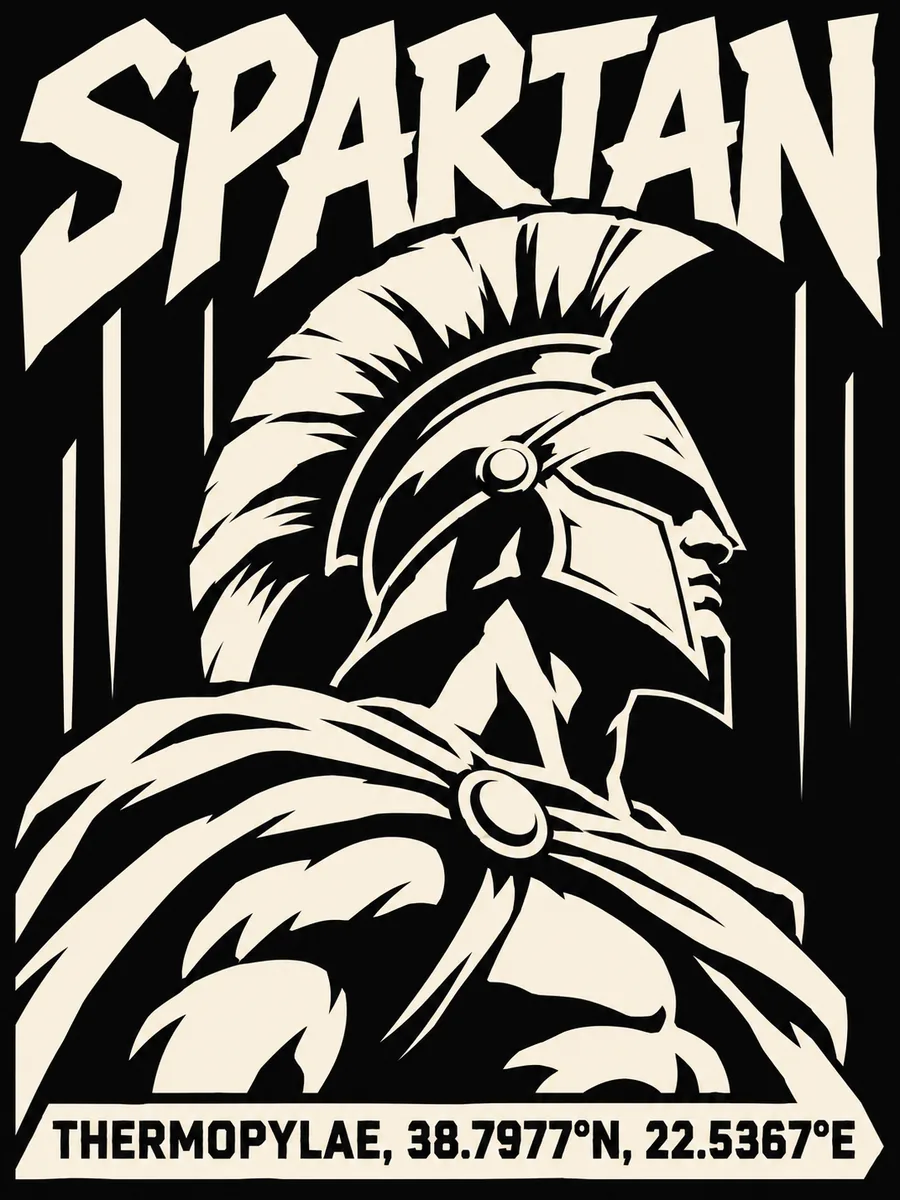
Spartan, first draft: a helmeted head in profile, with coordinates to four decimal places in the fact line. Spartan, second draft: a hoplite with spear and shield. Its line reads Thermopylae, 480 BCE, 700 Thespians. Draft 1Draft 2

Spartan

The first draft fixed the pass at Thermopylae to four decimal places of latitude and longitude, a precision that means nothing for a battle fought in 480 BCE. In its place the second draft carries a fact with a story in it, which is that seven hundred Thespians stayed as well. That line still awaits its source check against Herodotus, so the drawing remains on the bench.

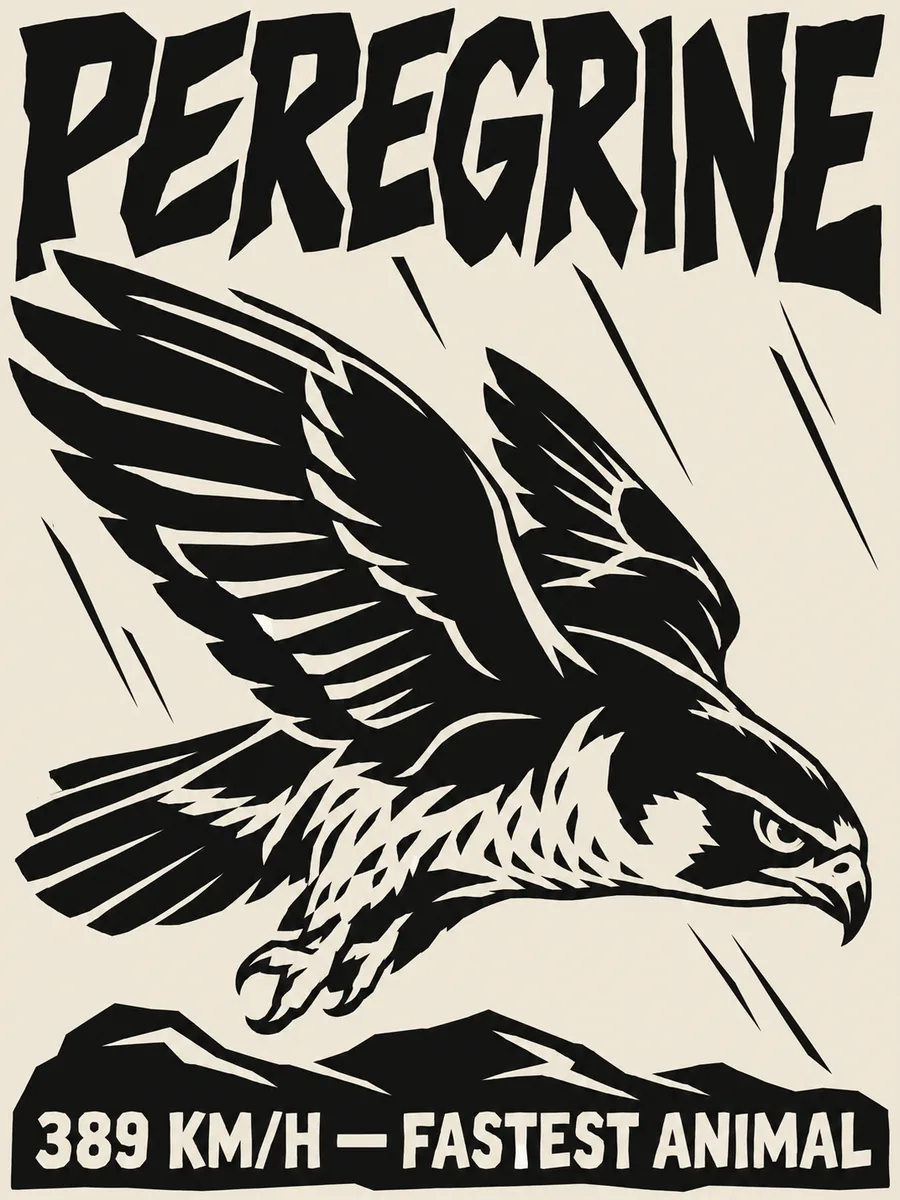
Peregrine, first draft: a bird of prey with broad, fingered wings. Draft 1 · Open

Peregrine

This drawing has not been corrected yet. Its wings are broad and fingered, which is how an eagle or a buzzard is built, whereas a peregrine's are long and pointed. For now the bird is back on the board, and the figure of 389 km/h will be checked to its source before it is printed on anything.

The doctrine

Four hands at one bench

Every mark on a plate comes from one of four ways of cutting, and the house thinks of them as four hands at one bench. Each is called for the subjects it understands, and each has a fault that it must be watched for. None of them is a filter that can be laid over a photograph.

  1. 01

    The Carver

    Seismic and topographic carving

    Strata, contours and scars belong to the Carver, who cuts for subjects that the earth made, such as craters, eruptions and flattened ground. A contour from this hand must map something that happened, or else be plainly a symbol.

    Watched for rings that look like the map of something which was never there.

  2. 02

    The Brush

    Kinetic sumi-chisel

    Rupture and speed belong to the Brush, which works in wedges and tapered strokes, whether the subject is ice closing, ash rising or a bird in its dive. Its gestures have to obey the physics of the subject, and a ship crushed sideways is never drawn as a prow breaking through.

    Watched for giving a volcano, a bird and a ship the same scratches.

  3. 03

    The Draughtsman

    Structural and technical cutaway

    Machines and instruments belong to the Draughtsman, who draws assemblies, axes and bracing and keeps each part where the real one is. Where a reconstruction is incomplete, the drawing has to say so.

    Watched for beautiful gears that could never turn.

  4. 04

    The Stencil-cutter

    Monolithic litho-stencil

    Ideas and measurements belong to the Stencil-cutter, who makes a few hard planes out of a diffraction pattern or a single move in a game of chess. Work from this hand is the easiest to mistake for evidence, which is why it is the most carefully labelled.

    Watched for decoration passed off as data.

What the house refuses

By the same doctrine there are things the house will not do, however good they would look.

  • Stamps, seals and signatures made to look archival.
  • Coordinates and decimals that no source supports.
  • Edition numbers that count nothing.
  • Photographs, diagrams or posters traced without leave.
  • The words "print ready" for a file that nobody has printed.
  • A caption that claims more than its source.

Two of the first drafts carried the second of these, and both are on show at the errata desk.

Five tempers, forty plates

Forty plates are planned in five tempers, eight to each. Only the first has been briefed so far, and the other four are named here so that nobody mistakes Histofab for a house of volcanoes and shipwrecks.

  1. MonumentalLarge forces and heroic isolation. Eight briefed, five drawn.
  2. QuietStillness, absence and time.
  3. DryWit that arrives on the second read.
  4. ExuberantMovement and colour where the subject earns them.
  5. SpeculativeThe imagined, clearly marked as imagined.

Make a beautiful object that can be understood instantly, studied slowly, worn confidently and checked for truth.